






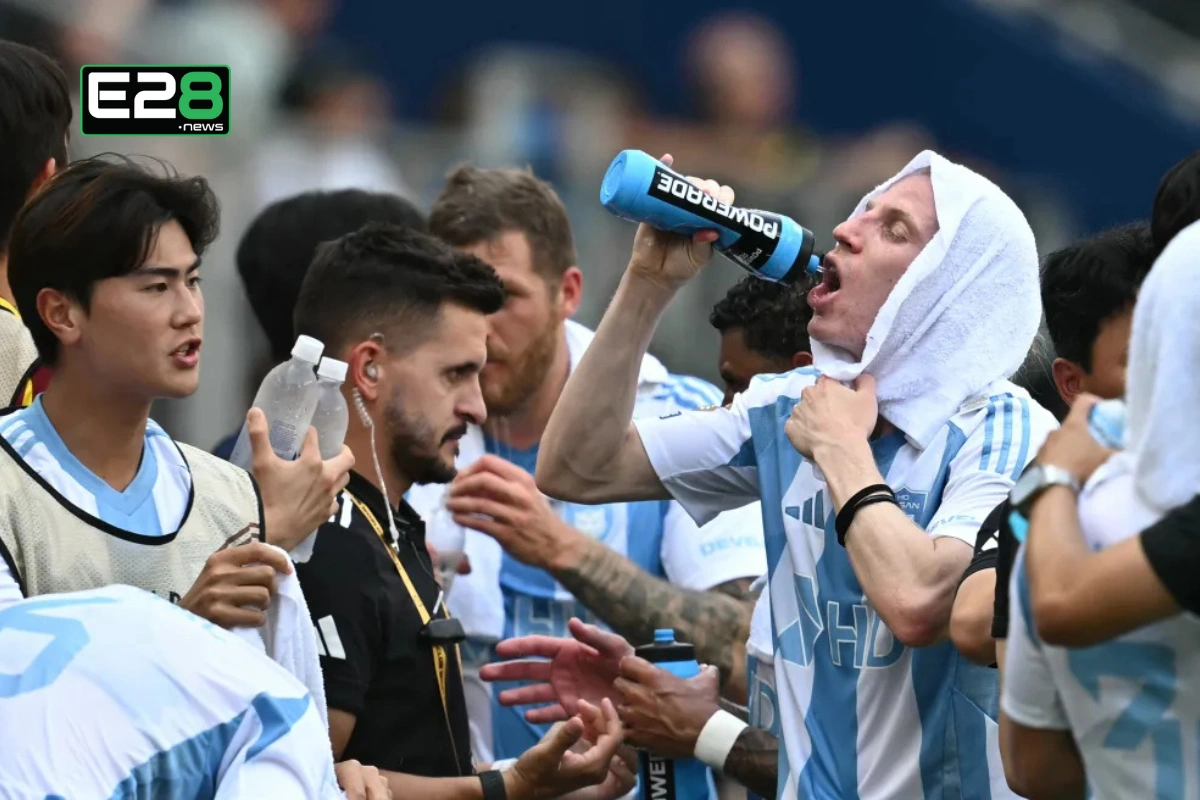
FIFA has announced a new initiative to introduce midfield cooling breaks in matches played under extreme heat conditions, aimed at protecting player welfare and maintaining performance standards. The move comes as global temperatures rise and football matches increasingly take place in challenging climates during key parts of the season.
Player Health at the Forefront
Under the new guidelines, matches that surpass a specific wet-bulb globe temperature (WBGT) threshold will include two extra stoppages — one in each half — where teams can hydrate and recover briefly on the halfway line. FIFA medical officials say that these breaks will be implemented on an experimental basis during selected competitions this year.
“We are committed to safeguarding our players. In conditions of extreme heat, strategic cooling breaks can reduce the risk of heat-related illnesses,” said a FIFA medical spokesperson at the announcement.
The breaks are not mandatory for every fixture but will be activated based on real-time climate data monitored by match officials and local health experts.
Impact on Match Flow and Strategy
While some traditionalists have questioned potential disruptions to rhythm and tactics, coaches and players have largely welcomed the initiative. With hydration and recovery recognised as key components of peak performance, many see the cooling breaks as a necessary evolution in the game’s health protocols.
Teams competing in regions known for hot weather — such as parts of Africa, the Middle East, and Southern Europe — may especially benefit from the new measures, which aim to strike a balance between competitive integrity and player safety.
Fans, too, have taken to social media to express support, noting that protecting athletes from heat stress should be a priority as football adapts to global climate trends.
Also Read: La Liga Club Reports Record Sponsorship Deal With Tech Giant